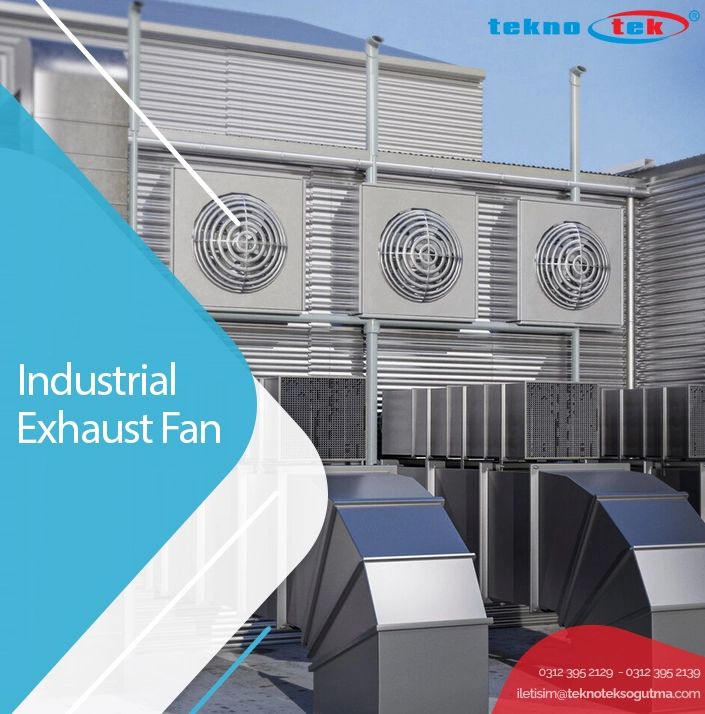
Industrial exhaust fan is one of the powerful ventilation equipment used in production areas, workshops, and factories. It helps renew the air in businesses where intensive air circulation is required. Thanks to its high extraction capacity, it helps remove smoke, steam, odors, hot air, and various particles accumulated in the air.
When selecting an industrial exhaust fan, factors such as the size of the area, required airflow rate, motor power, and operating conditions should be taken into consideration. Choosing the right capacity from models with wall-mounted, roof-mounted, or different installation options helps the ventilation system operate more efficiently and maintain air quality in the working environment. Considering factors such as energy efficiency, noise level, and ease of maintenance provides an economical and sustainable ventilation solution in the long term.
Industrial Type Exhaust Fan
Industrial-type exhaust fans are ventilation equipment used to increase air circulation in factories, workshops, warehouses, production facilities, and other large working areas. They help transfer hot air, smoke, steam, and unwanted odors that may occur during operations to the outside environment. A fan with a capacity determined according to the characteristics of the application area contributes to more effective air circulation indoors.
When selecting an industrial exhaust fan, factors such as the volume of the area, required airflow rate, motor power, and installation type should be evaluated together. Depending on the needs of the business, models that can be mounted on walls, windows, or different surfaces can be selected. In businesses where long-term operation is required, motor durability, equipment performance, and energy consumption are also important criteria to consider.
Industrial exhaust fans can be used in the following areas:
Increasing air circulation in production and assembly areas,
Removing hot and polluted air generated in workshops to the outside environment,
Supporting air exchange in warehouses and enclosed working areas,
Increasing ventilation capacity in areas where steam and strong odors are generated.
A ventilation fan selected with the appropriate capacity helps ensure more consistent air exchange within the environment. When selecting the equipment, it is important to check whether the product dimensions, airflow values, and operating conditions are compatible with the intended application area for efficient and long-lasting use.
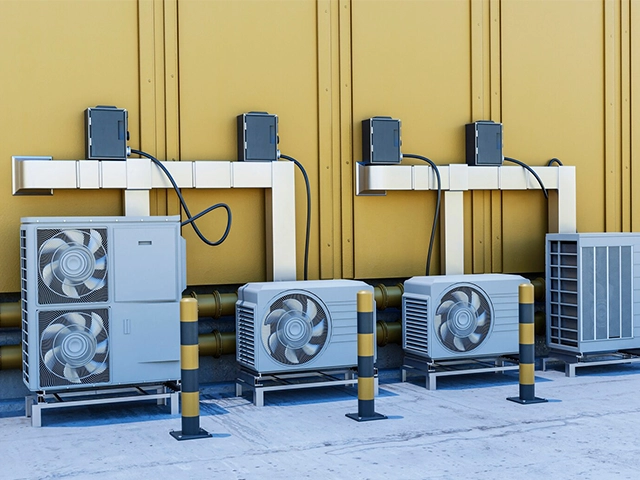
Industrial Exhaust Fan
Industrial exhaust fan systems help support the air renewal process in enclosed spaces by directing used air toward a specific outlet. The pressure difference created by the fan blades transfers accumulated air from the indoor environment to the outside, contributing to more consistent air circulation. These systems can be offered in different technical configurations depending on the production process and air load of the facility.
The installation position and air outlet direction are important for the performance of exhaust fans. If the airflow path within the area is not properly planned, the expected efficiency of even a powerful ventilation system may not be achieved.
Some key points to consider when using industrial exhaust fans include:
They help transfer accumulated air to the outside in a controlled manner.
They help direct airflow in a specific direction.
They offer different options according to operating conditions with various fan blade and housing designs.
They can be suitable for continuous operation in businesses requiring intensive use.
They support a more consistent air renewal process within the environment.
A properly positioned exhaust fan system contributes to balancing air circulation within the facility and making more effective use of the ventilation infrastructure.
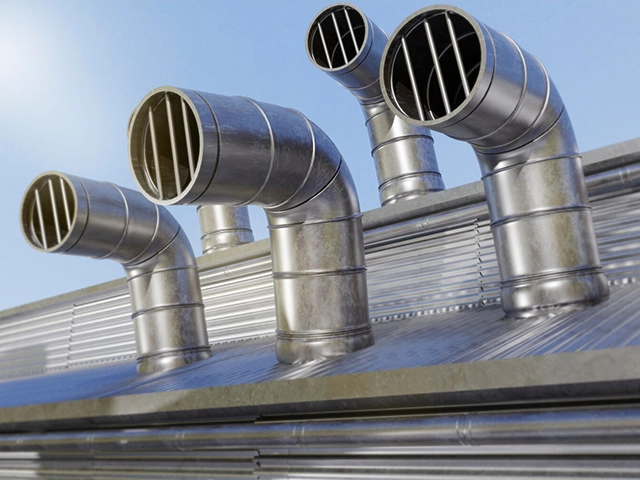
Industrial Exhaust Fan Installation
During industrial exhaust fan installation, the characteristics of the area where the equipment will be used should be considered to ensure efficient operation and proper air discharge. The installation method may vary depending on whether the exhaust fan is mounted on a wall, window, roof, or connected to an air duct.
The main points to consider during the installation process include:
Location selection: The exhaust fan should be positioned in an area where air can be transferred to the outside as easily as possible.
Securing: The equipment should be firmly secured to minimize vibrations that may occur during operation.
Electrical connection: The electrical infrastructure must be compatible with the power and technical specifications of the exhaust fan motor.
Air direction: An appropriate outlet point should be determined to prevent discharged air from returning to the indoor environment.
Duct compatibility: For systems with duct connections, connection dimensions should be checked, and the necessary sealing measures should be applied to prevent air leakage at connection points.
After the installation is completed, the exhaust fan should be operated and the airflow, electrical connections, mounting points, and overall operating condition of the equipment should be checked.
Industrial Exhaust Fan Prices
Industrial exhaust fan prices may vary depending on the motor power, dimensions, materials used in manufacturing, and intended application. Differences in air extraction capacity, motor design, and technical specifications among products in the same category can also result in different price ranges.
The main factors affecting industrial exhaust fan prices include:
Motor power: As motor capacity increases, the operating performance of the exhaust fan and, accordingly, the product price may also vary.
Fan blade diameter: The diameter and blade design of the fan are important factors affecting the air movement capacity of the equipment.
Housing construction: The quality and durability of the materials used in manufacturing, as well as the housing design, can affect the overall cost of the product.
Operating time: Models designed for long-term and intensive use may be available at different price levels due to their more durable components.
Additional features: Features such as speed control, protective guards, and different connection options can affect the total product price.
When selecting an industrial exhaust fan, technical specifications such as motor power, airflow capacity, product dimensions, and suitability for the intended application should be evaluated together.
Industrial Exhaust Fan Motor
The industrial exhaust fan motor is one of the main components responsible for driving the fan blades and generating airflow within the equipment. The motor’s power, rotational speed, and operating characteristics can directly affect the exhaust fan’s air extraction performance and efficiency under different operating conditions. Especially in systems used for extended periods, factors such as motor durability, energy consumption, and vibrations generated during operation should also be taken into consideration.
The motor used in an exhaust fan must be compatible with the technical specifications of the equipment to ensure stable and balanced operation. In working environments with demanding conditions such as dust, moisture, or high temperatures, appropriate protection features should also be considered when selecting the motor. Choosing a motor suitable for the intended application and exhaust fan capacity can contribute to more efficient operation of the air exhaust system.
To explore industrial fan and ventilation solutions suitable for your needs, you can take a look at Teknotek product solutions.
Frequently Asked Questions
Industrial exhaust fans are ventilation equipment used in factories, workshops, warehouses, and production facilities to remove hot air, smoke, steam, odors, and various particles from the environment. Thanks to their high airflow rate, they support air circulation and renewal in enclosed spaces.
When choosing an industrial aspirator, the volume of the area to be used, the required air flow rate, engine power, impeller diameter, operating time and installation method should be taken into consideration. Operating conditions such as temperature, humidity or dust in the environment are also important in determining the appropriate model.
Industrial exhaust fan prices vary depending on motor power, airflow, impeller diameter, housing material, product dimensions, and additional equipment. Therefore, when determining the price, it is necessary to first evaluate the area of use and the required technical specifications.
Industrial exhaust fans can be used in factories, production facilities, workshops, warehouses, assembly areas, and other industrial spaces requiring high air circulation. They are particularly helpful in transferring air to the outside environment from areas where hot air, smoke, steam, or strong odors are present.