
Chiller cooling systems are among the modern solutions that improve energy efficiency in large industrial and commercial buildings. These systems meet the air conditioning needs of buildings by cooling water and help reduce energy costs. With their high cooling capacities, they are widely used in facilities such as hospitals and manufacturing plants. Chiller systems use innovative technologies and components to deliver more cooling with less energy.
Chiller cooling systems are available in different types, each offering its own advantages. Air-cooled chillers are preferred in smaller spaces and locations with lower maintenance requirements, while water-cooled chillers offer higher efficiency and are commonly used in large facilities. Choosing the right type of chiller not only reduces energy costs but also extends the system’s service life and helps lower maintenance expenses. Therefore, seeking expert guidance when selecting a chiller system that meets the specific needs of a business is essential.
What Are Chiller Cooling Systems?
Chiller cooling systems are mechanical cooling systems that remove excess heat generated in a process or HVAC circuit to produce water at a low temperature. The cooled water is pumped to machines, production lines, air-handling units, or various points of use within the facility. The water, which reheats during use, returns to the system and is cooled again, creating a closed-loop circulation.
The most basic answer to the question “What does a chiller do?” is that it removes excess heat generated in the system in a controlled manner. This process is carried out through the coordinated operation of the compressor, condenser, evaporator, expansion valve, pump, and control equipment. Each component plays a role in a different stage of the cooling cycle and contributes to maintaining the water within the desired temperature range.
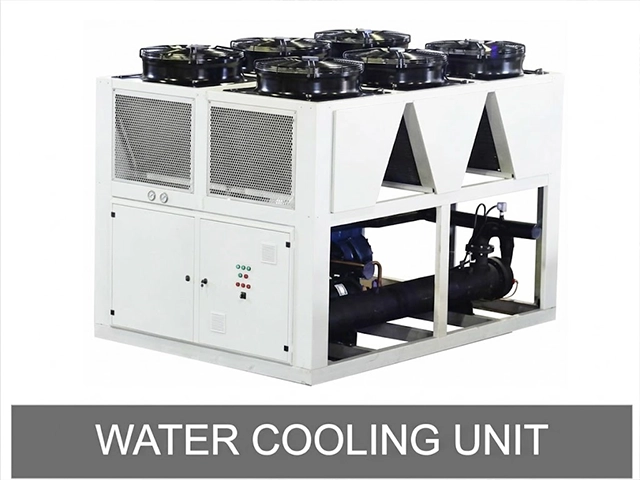
The basic components of chiller systems can be listed as follows:
- Compressor: Increases the pressure of the refrigerant and enables it to circulate within the cycle.
- Condenser: Helps transfer the heat carried by the refrigerant to the external environment.
- Evaporator: Removes heat from the water to be cooled.
- Expansion valve: Reduces the pressure of the refrigerant, preparing it for the next cycle.
- Pump and control equipment: Ensure the circulation of the cooled water and the controlled operation of the system.
So, what is a chiller evaporator? The evaporator is the heat exchanger where heat from the process water is transferred to the refrigerant. As the water passes through this section, it loses its heat and becomes ready to be returned to the facility.
Chiller Cooling System Prices
Prices for chiller cooling systems vary depending on many factors, such as unit capacity, cooling load, chiller type, compressor technology, evaporator and condenser design, pump group, automation level, and the length of the piping . Two systems with the same capacity may have different price levels depending on the equipment used and project conditions.
The installation structures of air-cooled and water-cooled chiller systems also differ. In air-cooled systems, heat from the condenser is transferred directly to the outside environment via fans, whereas water-cooled systems may require an additional pump, piping, and, in most applications, a cooling tower.
| Factors Affecting Price | Impact on Cost |
| Cooling Capacity | As capacity increases, the sizes of the compressor, heat exchanger, and auxiliary equipment may increase. |
| Chiller Type | Air-cooled and water-cooled systems have different equipment and installation requirements. |
| Compressor Technology | The type of compressor used can affect the unit’s cost and operating efficiency. |
| Pumps and Piping | Piping distance, pipe diameters, and pump requirements can affect the total cost. |
| Level of Automation | Advanced control and remote monitoring systems can increase investment costs. |
| Installation conditions | Equipment location, transportation, installation, and site conditions may incur additional costs. |
Energy consumption must also be taken into account when evaluating prices. A system with a low initial purchase price may become more costly in the long run due to high energy consumption.
Before requesting a price quote, the facility’s actual heat load, operating hours, target water temperature, and required flow rate must be determined. Selecting the correct capacity helps prevent unnecessary investment costs and inadequate cooling performance.
Chiller Operating Principle
The chiller operating principle is based on the transfer of heat from one point to another within a closed refrigerant cycle. Hot water returning from the facility enters the evaporator and transfers its heat to the refrigerant. While the water, having lost its heat, is returned to the system at a lower temperature, the refrigerant transitions to the gaseous phase using the energy it has absorbed.
When the gaseous refrigerant reaches the compressor, its pressure and temperature are increased. The refrigerant is then sent to the condenser, where it releases the heat it carries into the external environment and returns to a liquid state. In air-cooled chillers, this heat is transferred to the air via fans, while in water-cooled systems, the heat is removed through the condenser water.
In the final stage, the refrigerant passes through the expansion valve, where it loses pressure and returns to a low temperature. It then returns to the evaporator, and the cycle begins anew. By continuously repeating this cycle, the system ensures that the water temperature remains within the specified range.
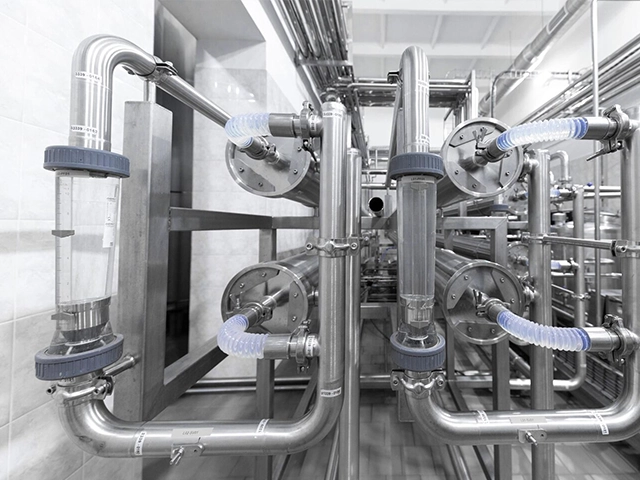
How Does a Chiller Work?
A chiller removes heat from hot water coming from the facility, cooling it to a temperature suitable for reuse. The cooled water is then pumped to the production line, process equipment, air-handling units, or fan-coil units. At these points, the water absorbs heat and warms up again, returning to the chiller to continue the cycle.
In industrial applications, chilled water can be used to control the temperature of various equipment such as machines, molds, tanks, heat exchangers, or production line components. This ensures that the process operates within specific temperature limits and helps minimize the negative effects of overheating on production quality.
In chiller ventilation applications, however, the chiller does not blow cold air directly into the environment. Instead, it produces cold water for use in air-handling units or fan-coil systems. As the cold water passes through the coils, air is drawn over these surfaces, cooled, and then released into the environment. Thus, the chiller serves as the cold water production component in central air conditioning systems.
The Difference Between a Chiller and a Cooling Tower
A chiller and a cooling tower are not the same equipment, and their roles within the system differ. While a chiller produces water at a low temperature using a mechanical refrigeration cycle, a cooling tower helps dissipate the heat generated on the condenser side—particularly in water-cooled systems—into the atmosphere.
| Features | Chiller | Cooling Tower |
| Primary Function | To produce chilled water | To transfer system heat to the atmosphere |
| Operating principle | Compressor-based refrigeration cycle | Heat transfer between water and air |
| Applications | Process and HVAC | Typically the condenser circuit |
| Role within the system | Primary cooling equipment | Auxiliary heat rejection equipment |
| Required for operation | Selected based on cooling requirements | Typically used in water-cooled systems |
Frequently Asked Questions
Chiller systems cool water by using a refrigerant to absorb heat and transfer it to the outside environment. The chilled water is then distributed to cool buildings or industrial processes.
Chillers are mainly divided into two categories: air-cooled and water-cooled systems. Both types have different applications and advantages.
The ideal chilled water temperature depends on the application, the required cooling capacity, and the operating conditions. In air conditioning applications, chilled water is commonly supplied at around 6–7°C, while industrial processes may require different temperatures depending on their specific needs.
When selecting a chiller cooling system, factors such as the facility’s cooling capacity requirements, target water temperature, operating hours, required water flow rate, and energy efficiency should be considered. Air-cooled and water-cooled chiller options should also be evaluated according to the facility’s physical conditions and intended application.
Chiller cooling systems are used in food production facilities, industrial production lines, process cooling applications, storage facilities, and central air conditioning systems. They help maintain equipment temperatures and provide the cooling conditions required for industrial processes.
To determine the appropriate chiller system for your facility, select the correct capacity, and evaluate project-specific solutions, please contact Teknotek Soğutma. You can receive detailed information and a price quote for chiller systems tailored to your needs.