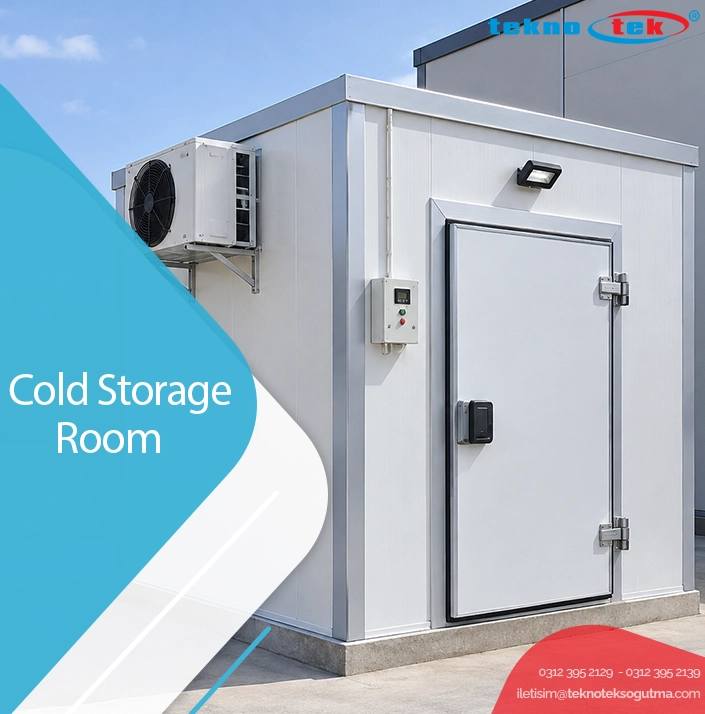
Cold storage room refers to a controlled storage area designed to store food, pharmaceuticals, and temperature-sensitive products under specific temperature conditions. Effective thermal insulation and balanced air circulation help maintain product quality. The system capacity should be determined according to the type of products stored and the intensity of room use.
Cold storage room planning should take into account room volume, target temperature, door opening frequency, and storage duration. Continuous operation of the refrigeration system is critically important for maintaining the cold chain. Using a generator with suitable capacity during power outages can reduce product losses caused by temperature fluctuations. Regular maintenance and monitoring of energy consumption support the safe and efficient operation of the system.
Cold Storage Room Prices
Cold storage room prices may vary depending on the dimensions of the room to be installed, the required temperature range, panel thickness, refrigeration capacity, and the specifications of the equipment used in the system. The main factors that determine cold room costs are as follows:
- Room volume and temperature level: The temperature required to store chilled or frozen products directly determines the capacity of the refrigeration system.
- Panel and insulation properties: Panel thickness, exterior surface coating, and insulation materials used on the floor are important for reducing heat transfer and supporting energy efficiency.
- Storage doors: Door dimensions, frequency of use, and the selected door model can affect both heat loss within the room and the overall cost.
- Refrigeration equipment: Compressors, evaporators, condensers, and control units are selected according to the room capacity and operating conditions.
- Application area: Each area of use, such as a food production facility, industrial kitchen, or logistics warehouse, may involve different technical requirements.
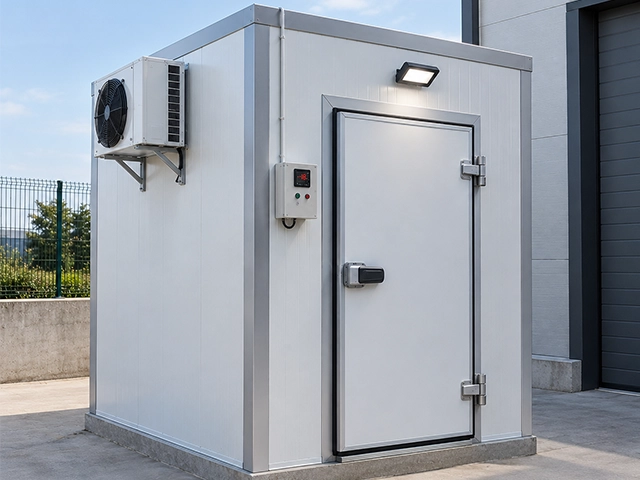
Modular cold room systems can be installed in different dimensions to suit the available space and requirements of the facility. For accurate pricing, room dimensions, target temperature, the type of products to be stored, and daily usage intensity should be evaluated together.
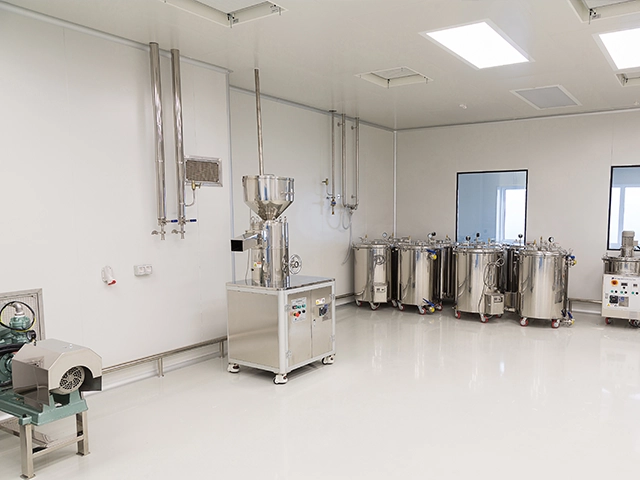
Cold Room Installation
Cold room installation is planned according to the characteristics of the application area and technical requirements in order to provide and maintain the temperature conditions required by the products. Room dimensions, the specified temperature level, the type of products to be stored, daily product entry and exit frequency, and storage duration all play an important role in determining the capacity of the refrigeration system.
During installation, the following factors should be taken into consideration in particular:
- Panel and insulation: The insulation solutions selected for the walls, ceiling, and floor should be suitable for the target temperature range, helping to control heat loss.
- Refrigeration capacity: When determining the capacity of the refrigeration equipment, room volume, the amount of products to be stored, and frequency of use should be evaluated together.
- Door selection: In areas with frequent product entry and exit, choosing a sliding door can allow the passage area to be used more efficiently.
- Layout: Shelving and other storage equipment should be arranged so that they do not obstruct airflow and allow products to be moved easily.
In addition to fixed storage areas, container cold room options can also be a suitable alternative for businesses that need storage space for temporary use or at different locations. Cold rooms used across various industries are designed according to the positive or negative temperature ranges required by the products. Correctly defining operating conditions before installation helps ensure that system capacity is selected appropriately and energy consumption remains balanced.
Ankara Cold Room
Ankara cold room solutions can be designed according to the requirements of temperature-controlled areas used in food production, logistics, storage, and retail sectors. During project planning, the region’s climate conditions, the facility’s usage intensity, and the characteristics of the products to be stored should be evaluated together.
During installation, the design of product entry and exit areas should be considered alongside the wall panel selected to ensure effective insulation. A storage door suited to the usage intensity and characteristics of the passage area can help reduce temperature fluctuations and support more orderly operational processes. The capacity of the refrigeration equipment should be calculated according to room volume and the specified temperature conditions.
For your project, you can review Teknotek’s cold room and industrial refrigeration solutions and obtain detailed information about systems suitable for your needs.
Frequently Asked Questions
Cold storage facilities are used to preserve food, pharmaceuticals, and temperature-sensitive products under specific temperature conditions. Depending on the characteristics of the product to be stored, the cooling system can be designed to accommodate either positive or negative temperature values.
Cold room prices can vary depending on room dimensions and volume, target temperature range, panel thickness, insulation properties, door model, cooling capacity, and equipment used. A comprehensive assessment of the project’s technical requirements is necessary to determine an accurate cost.
During cold room installation, panel and insulation properties, cooling capacity, door selection, shelf placement, and air circulation must be considered. Additionally, product entry and exit frequency and storage duration are important factors in determining the system’s capacity.
When determining cooling capacity, factors such as room volume, target temperature, quantity of product to be stored, frequency of product entry and exit, and operating conditions are considered. Cooling equipment selected taking these factors into account helps maintain the desired temperature conditions more consistently.
When planning a cold storage facility, the climate conditions of the region, as well as the intensity of use of the facility, the room volume, and the characteristics of the products to be stored, should be evaluated. In particular, the selection of insulation and cooling equipment should be made in accordance with the operating conditions of the project.